Joyland Montessori S.D S Public School, Sector 38-C, Chandigarh☎ 89888 69740 · 98771 33479 · Mon–Fri, 8:00 AM–2:00 PM   Book a school visit
At Joyland Montessori School

Adaptive Action PrincipleTrain action with direction. Build capacity. Meet challenges accurately.

At Joyland Montessori School, we explore how children use their bodies, senses and attention together. The Adaptive Action Principle is a proposed way of understanding how deliberately directed action can build the capacity to meet challenges.

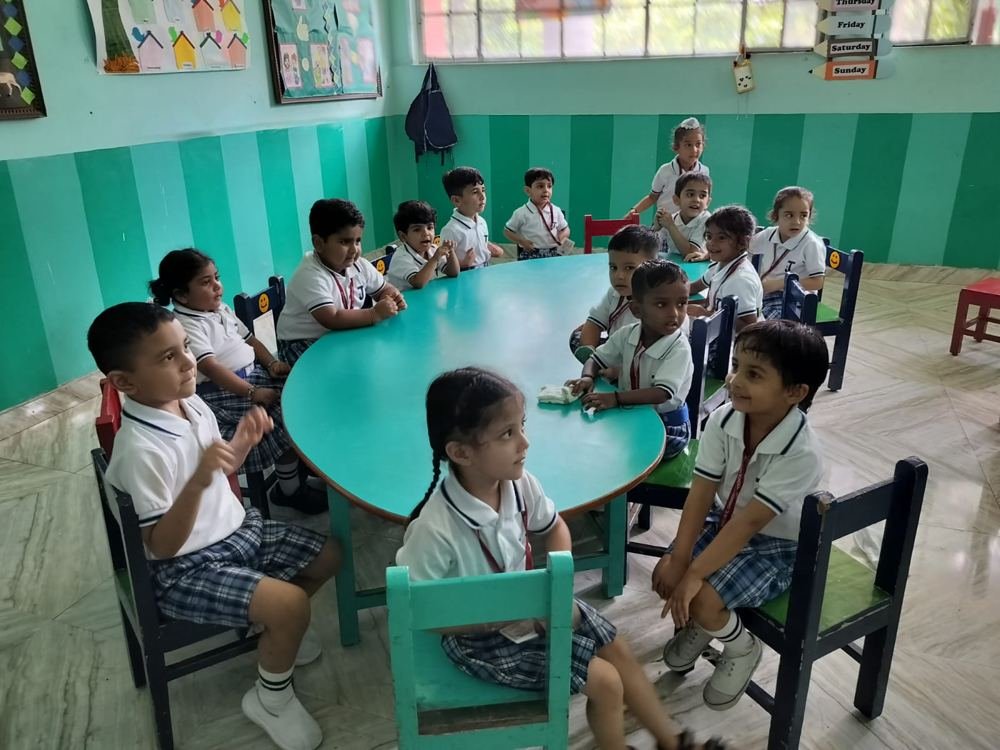
Joyland Montessori School children seated around a teal table in their classroom, smiling and looking up
From knowing
to doing.
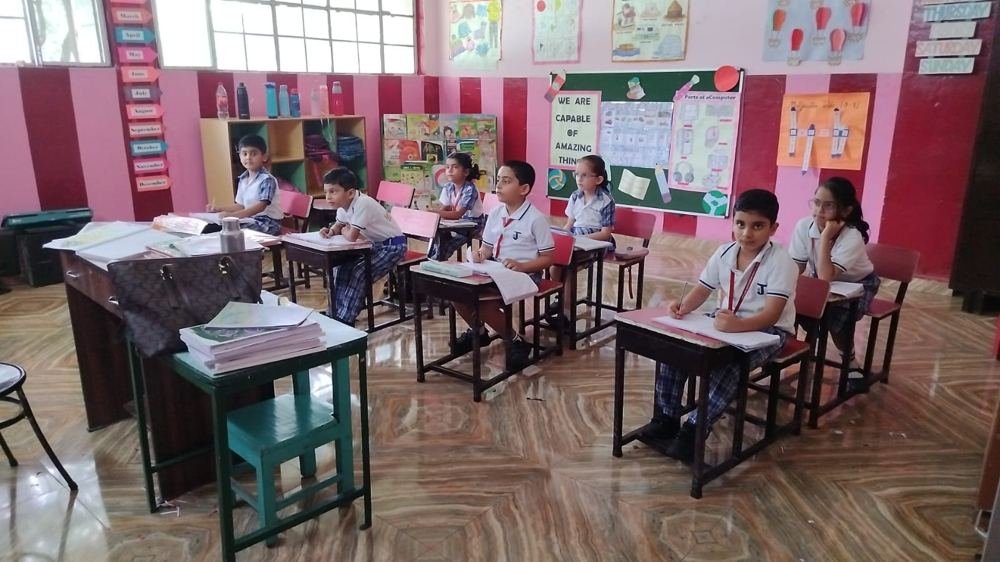
Joyland Montessori School children working at their desks in a bright pink classroom beneath a board reading We are capable of amazing things
What the Adaptive Action Principle means

Training action to build capacity.

The core idea is that human actions can be deliberately trained and directed to improve the body’s overall capacity to meet challenges.

The principle brings together sensory processing, coordination, movement and other bodily functions as one integrated capacity, rather than treating them separately. Physical accuracy is one important target, but it is not the only one.

“The Adaptive Action Principle proposes that deliberately training and directing human action can develop the body’s integrated capacity to respond to challenges with greater accuracy, coordination and effectiveness.”

— The proposed definition

In plain words: it is about practising how to act, not only what to know. When action is practised with a clear direction, a child can learn to respond more accurately and to adjust when a challenge changes. Joyland applies this perspective to children’s everyday learning and development.

A framework for training and directing human action to meet challenges. It is not an established scientific law, and the examples on this page illustrate the idea rather than prove it.

Why this matters in childhood

Every challenge asks the whole body to respond.

A child meets small challenges all day: carrying a cup without spilling it, forming a letter, keeping balance, following a rhythm. Each one asks the senses, movement and coordination to work together.

Accuracy is one thing we can see in the result. The Adaptive Action Principle also looks at the wider capacity behind it: how well the body takes in information, coordinates itself and adapts when the challenge changes.

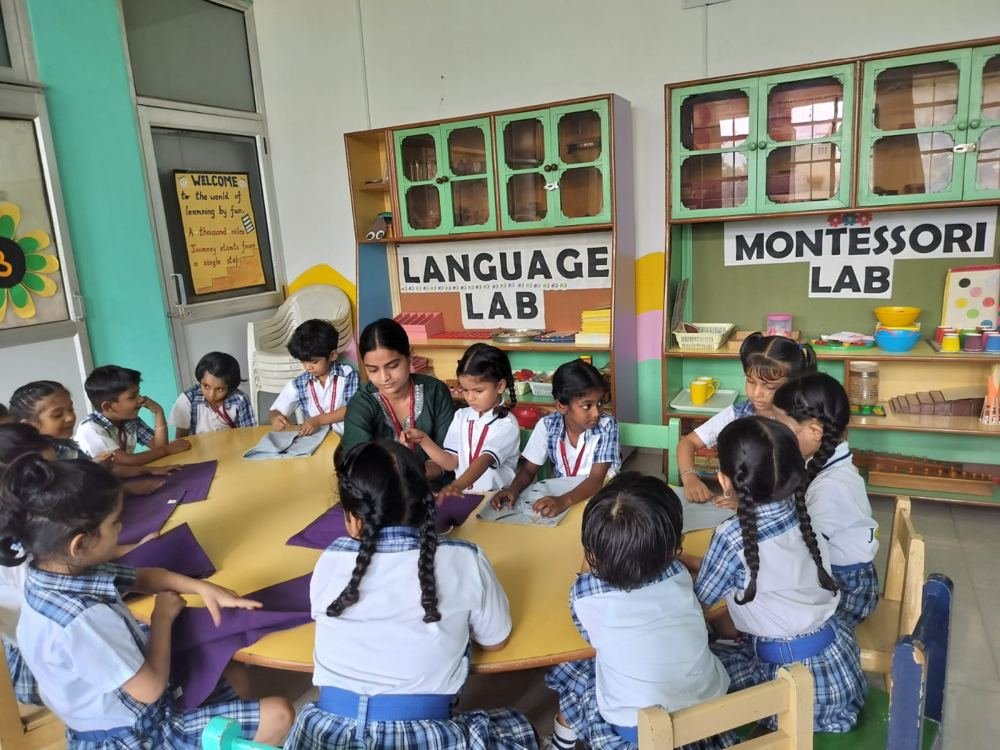
Joyland Montessori School children and their teacher seated at a yellow table handling pieces of cloth, in front of the Language Lab and Montessori Lab shelves
Practical, hands-on work beside the Language Lab and Montessori Lab
Knowing and doing

Knowing what to do and being able to do it effectively are not always the same.

Children benefit from opportunities to develop both understanding and the ability to act on it. The Adaptive Action Principle brings direction, training and evaluation of action into the way Joyland thinks about learning.

How it works

A simple sequence, repeated.

The principle can be pictured as a loop: each response shows what to train next.

Challenge

Something asks the body to respond, for example placing, balancing, copying or following.

Identify the required capacity

What does this challenge call for: accuracy, coordination, sensory processing, movement, or a combination?

Direct and train action

Practise the action with a clear direction, rather than repeating it without a purpose.

Evaluate the response

How did the body respond? What worked, and what needs more practice?

Develop greater capacity for future challenges

Build on the response so the next challenge can be met more skilfully.

This is a simple outline of the idea. It is not a set of instructions or exercises.

Illustrations, not proven outcomes

The idea in everyday terms.

Illustration

Movement accuracy

Placing a small object exactly where it belongs. The child directs the movement, checks the result and tries again.

Illustration

Coordination

Moving different parts of the body together, such as clapping to a steady rhythm or stepping in time.

Illustration

Sensory processing

Noticing how a surface, a sound or a movement feels, and adjusting the response to it.

Illustration

Learning

Forming letters or handling materials: practising the action with direction before expecting speed or neatness.

These are illustrations of the idea only. They are not scientifically proven outcomes, they are not evidence that the principle works, and they are not instructions.

Research context

What research does and does not say.

The Adaptive Action Principle is informed by research on motor development and learning in early childhood. The reviews below are part of that wider research. They are not tests of the principle.

Zeng, Ayyub, Sun, Wen, Xiang and Gao · 2017

Effects of Physical Activity on Motor Skills and Cognitive Development in Early Childhood: A Systematic Review

BioMed Research International

What it found: Reviewed 15 randomised trials in children aged 4–6. In 8 of 10 studies of motor skills, physical-activity programmes were followed by significant improvements. In 4 of 5 studies of cognitive outcomes (language learning, academic achievement, attention, working memory) the results were positive; one study found no effect.

Limits: The authors note that few studies were available and that more research is needed.

Read the review ↗
Jylänki, Mbay, Hakkarainen, Sääkslahti and Aunio · 2022

The effects of motor skill and physical activity interventions on preschoolers’ cognitive and academic skills: A systematic review

Preventive Medicine, volume 155, article 106948

What it found: Reviewed 35 studies of 2,472 children aged 3–7. About 71% of the studies reported beneficial effects on cognitive and academic skills, with the clearest evidence for executive functions, language and numeracy.

Limits: Only 2 of the studies were of strong methodological quality and 24 were weak. The authors describe the evidence as weak.

Read the review ↗
Systematic review · 2023

Association between motor and math skills in preschool children with typical development

Frontiers in Psychology

What it found: Reviewed 18 studies and found positive associations between fine motor skills (fine motor coordination and visuomotor integration) and mathematical performance, most strongly for numerical counting.

Limits: These are associations. They do not show that one causes the other.

Read the review ↗

What this adds up to: the research suggests that motor and coordination skills and early learning are connected, although much of the evidence is limited. These reviews concern motor skills and physical-activity programmes in general. They did not test the Adaptive Action Principle, and sensory processing is not their focus. Nothing here shows that the principle itself works.

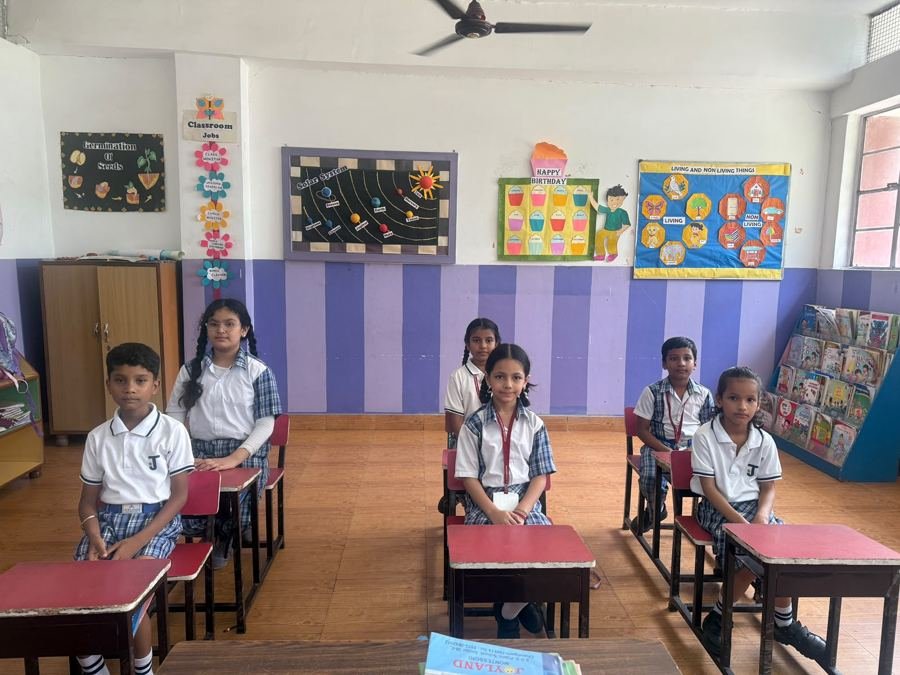
Six Joyland Montessori School children sitting attentively at their desks in a purple-striped classroom
What it aims to develop

Six areas of growth.

These are the capabilities the Adaptive Action Principle aims to nurture in children at Joyland Montessori School.

Greater accuracy

Developing care and precision in activities such as drawing, writing, handling objects and completing tasks.

Better coordination

Bringing sensory processing, movement and purposeful action together.

More focused activity

Learning to direct attention towards the task at hand.

Greater adaptability

Learning to adjust when an action does not produce the intended result.

Confidence through capability

Gaining confidence as children become more capable of carrying out tasks themselves.

Readiness for learning

Developing practical capabilities that support participation in classroom activities and everyday challenges.

These are Joyland’s educational aims and areas of development. Every child grows at their own pace, and we do not promise specific outcomes for every child.

Examples from everyday classroom activities

Everyday moments in our classrooms.

Everyday activities offer children opportunities to practise purposeful action, care, coordination and adaptability.

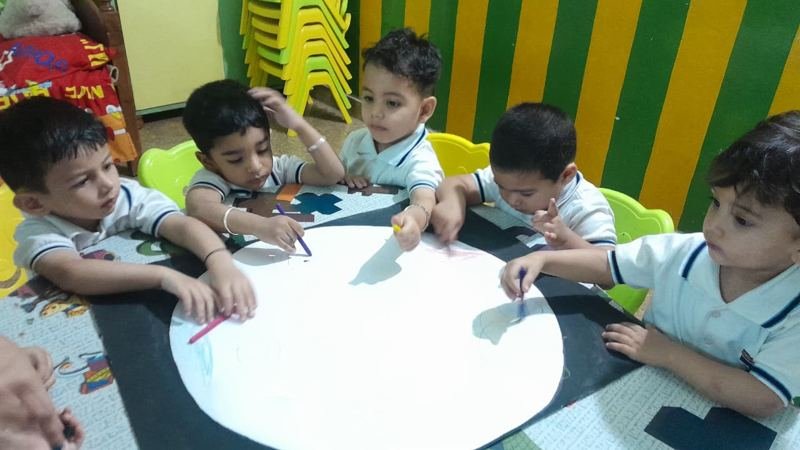
Five Joyland Montessori School children drawing with crayons on a large circle of paper
Drawing together
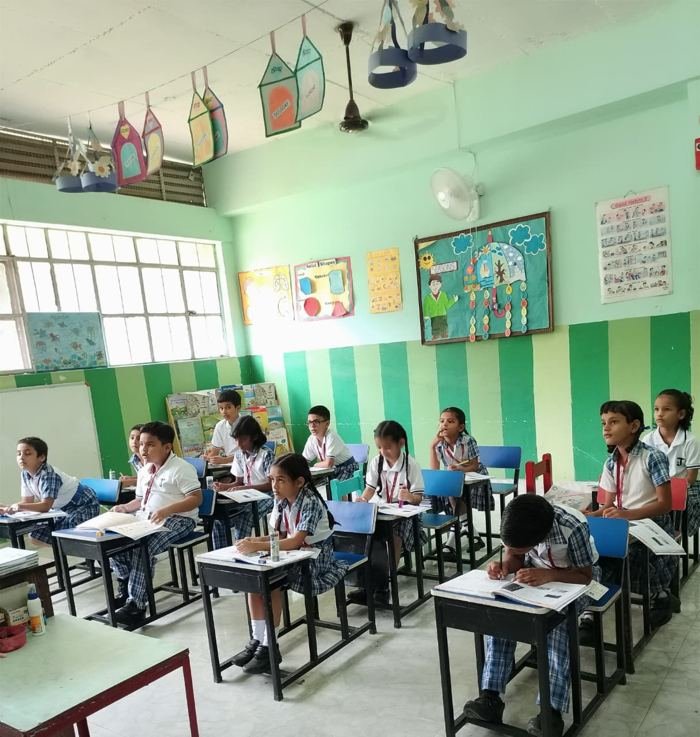
Joyland Montessori School children working at their desks with workbooks in a green-striped classroom
Writing in workbooks
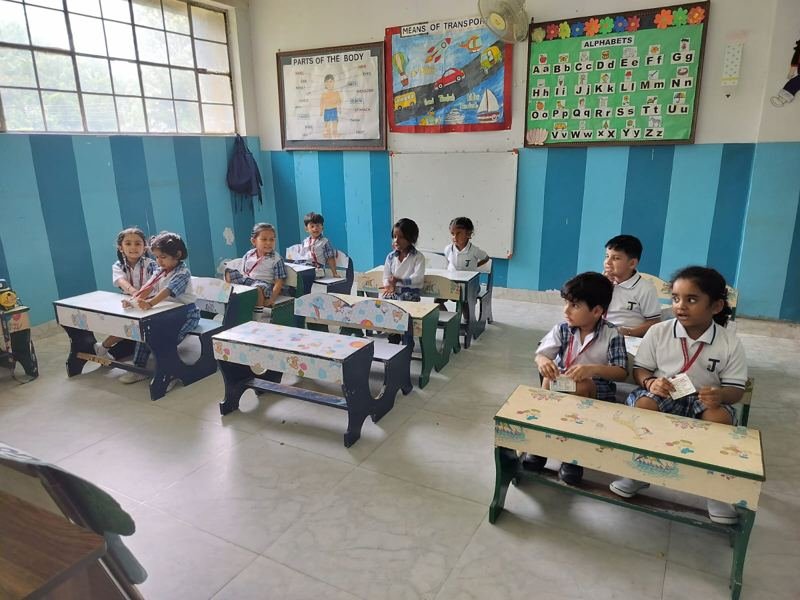
Young Joyland Montessori School children seated on small benches in a blue classroom, some holding their ID cards
Ready to learn together
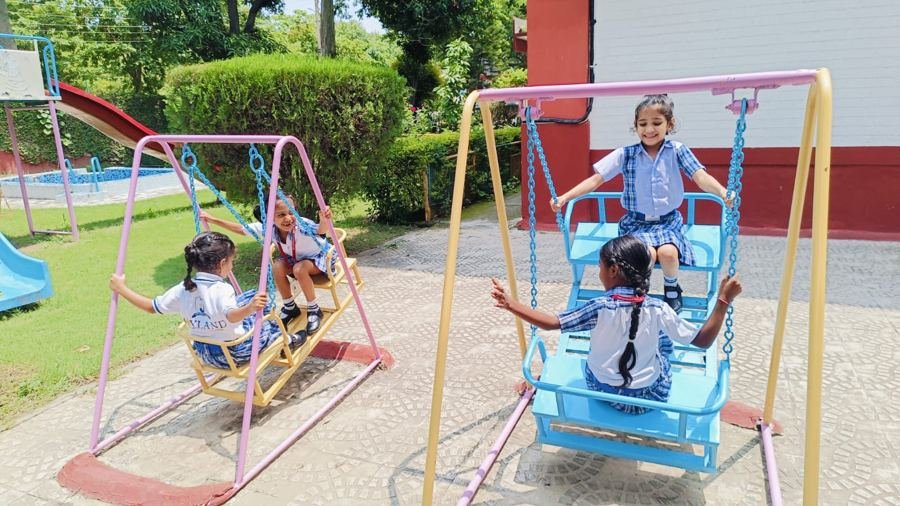
Joyland Montessori School children swinging together in the school garden
Movement and play outdoors
How it fits Joyland’s broader approach

Learning by doing, with a purpose.

Joyland’s Montessori environment already encourages children to learn by doing. The Adaptive Action Principle adds a particular lens: how action is directed, trained and evaluated.

It sits alongside everything else we do at Joyland Montessori School, including Joy Yoga for Kids™, and you can read more about our school on our About Us page.

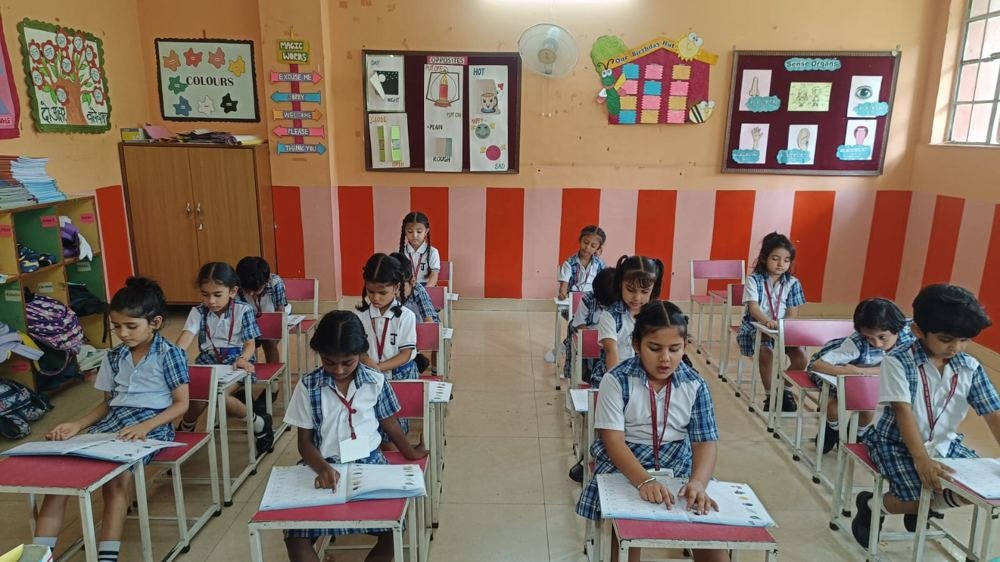
Joyland Montessori School children reading and writing at their desks in an orange-striped classroom

Come and see Joyland for yourself.

Visit Joyland Montessori S.D S Public School, Sector 38-C, Chandigarh. Meet our teachers, talk with us about our approach and ask about admissions for 2027–28.

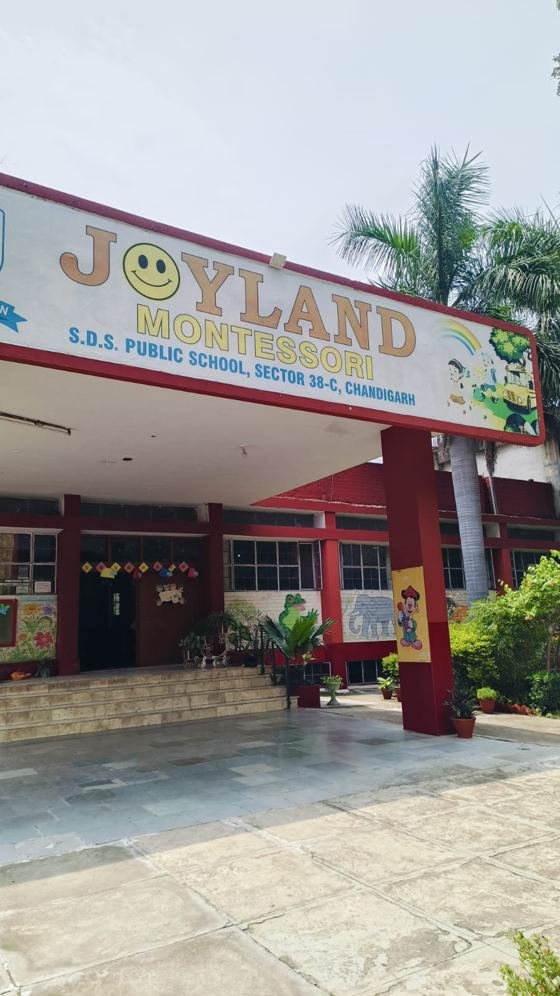
The entrance of Joyland Montessori School with its painted sign, rainbow artwork and red pillars
Scroll to Top